

Stop guessing faces
This is the complete face drawing course that teaches you how to understand, construct, stylize, shade, color, and draw believable faces from reference or imagination.
LEARN TO DO IT IN 3 SIMPLE STEPS

Draw from within
Learn how to approach drawing from within and never sketch another flat face again.

Add character and personality
Make your characters come alive with facial expressions that feel real.

Paint color and light
Bring mood and three-dimensionality to your faces with values and color.
DRAWING FACES CAN BE INCREDIBLY FRUSTRATING
Sometimes the proportions are almost right, but something still feels off. Sometimes the features look good individually, but the face doesn’t feel believable. Sometimes you can copy a reference, but the moment you try to draw a face from imagination, everything falls apart.
The solution is to draw from the inside out
In How to Draw Faces Like a Pro, I’ll teach you the full system I use to understand and draw faces with confidence.
We’ll start with the structure underneath the face, including the essential bony landmarks that explain why the face looks the way it does. Then we’ll study proportions, facial features, planes of the head, hair, likeness, character consistency, expressions, value, color, and finally a full character portrait from scratch.
This is not a course about copying one pretty portrait.
It is a complete foundation for artists who want to understand faces deeply enough to draw them from reference, from imagination, and from different angles, while still being able to stylize them and make them feel alive.
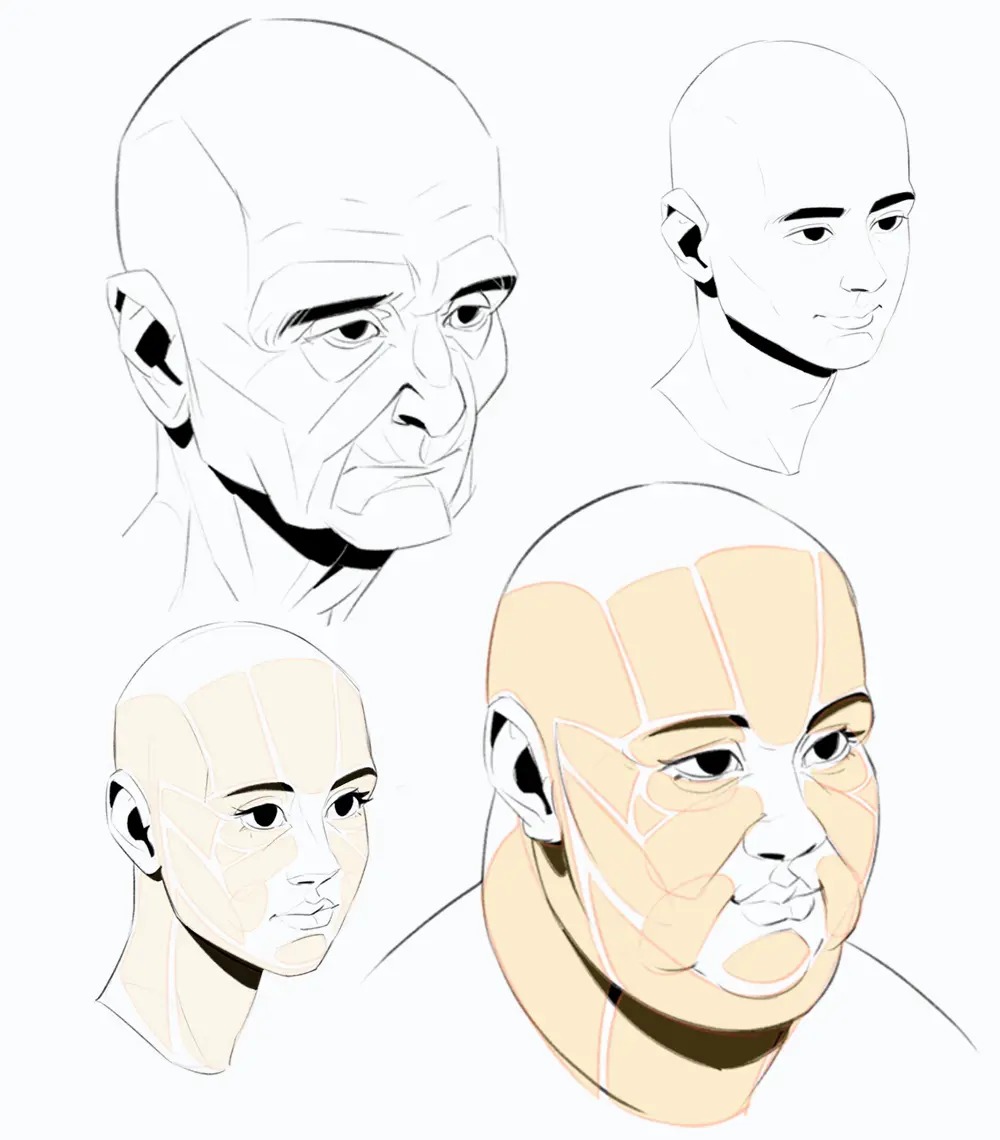
WHO IS THIS COURSE FOR?
This course is for artists who want to finally understand faces instead of relying on random tips, lucky sketches, or endless reference copying.
It is especially useful if you:
- Want to draw the same character consistently from multiple angles
- Want to improve facial expressions and personality
- Struggle with same face syndrome
- Feel like your portraits look “off” but not sure what's wrong with them
- Want to capture likeness from reference
- Want a simple but powerful approach to shading and coloring faces
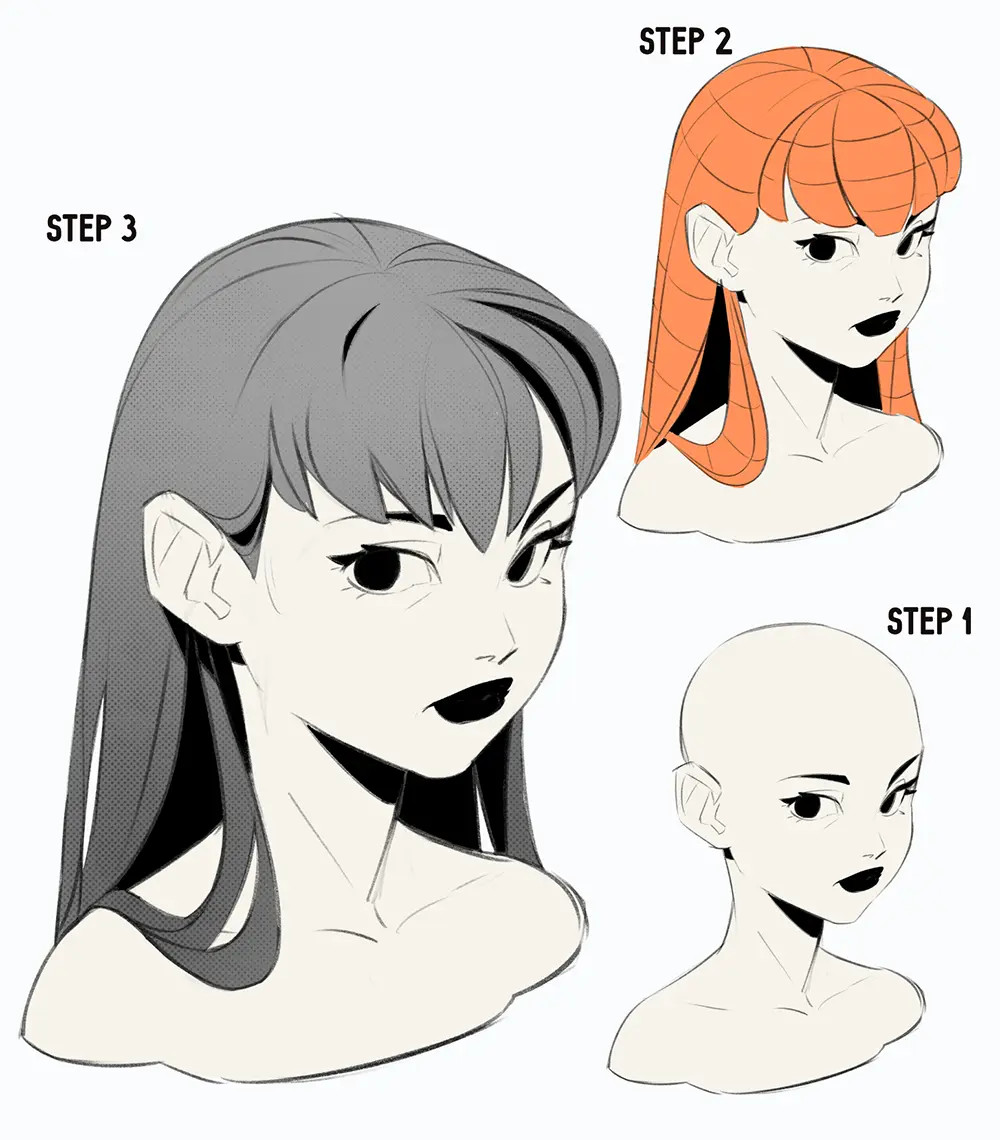
WHAT THIS COURSE INCLUDES
I wanted to make sure that this course gave you everything you needed to master drawing faces. So I added 2 bonuses to everyone who gets this course, a Portrait reference pack, and 1 Year Access to Facely3D. A 3D companion app for drawing the head


ABOUT ME
Hey, my name is Lucas. I have loved drawing and painting since I can remember, from the years of falling in love with anime and video games as a kid in Costa Rica, to moving to the other side of the world and working as an art director for mobile games in Slovenia
For the past 10+ years, I have been a professional artist, working as a concept artist and illustrator, teaching at university, art directing video games, and now teaching artists all over the world.

My love for drawing faces is all here, in every lesson, and I can't wait for you to try it and learn from my mistakes and successes.

Course curriculum
Module 1 - Welcome & Introduction

Welcome & Roadmap
A walkthrough of the full course, how it's structured, what you'll learn, and how to get the most out of every module and bonus.

Access to Facely3D
Get early access to Facely3D, my head reference app

About Me, Style & Influences
A personal look at my art journey, influences, and growth over the years to show how skills develop with time and practice.

Set a goal and Track your Progress
Learn how to set clear goals, track progress, and stay motivated using simple methods proven to help artists improve faster.

Introduction to the Head
A quick, sketchy introduction to head construction and basic proportions to give you a fast, confidence-boosting starting point.

Drill - Head Lay-In
A practical warm-up drill that helps you place the head in space and practice drawing it from multiple angles.

Wrap-Up & Assignment
A recap of the key ideas from the module and a simple assignment to help you lock in the basics.
Module 2 - The Skull

The 12 Skull Bony Landmarks
An overview of the key bony landmarks artists rely on to build believable skulls and strong head structures.

The Skull Proportions - Side View
Draw the skull from the side while applying landmarks and proportions to understand its overall shape and balance.

The Skull Proportions - Front View
Study the skull from the front view, focusing on symmetry, proportions, and how landmarks align.

The Skull Proportions - Three Quarter View
Explore the three-quarter view of the skull and learn how landmarks shift with perspective.

The Skull Drill
Practice drawing skulls from multiple angles to strengthen spatial understanding and perspective skills.

Wrap-Up & Assignment
A summary of the module with an assignment designed to reinforce skull structure and landmark placement.
Module 3 - The Head

Head Proportions - Side View
Build the head from the side by combining skull structure with muscles, fat pads, and surface landmarks.

Head Proportions - Front View
Draw the head from the front, focusing on symmetry and translating skull anatomy into a living face.

Head Proportions - Three Quarter View
Construct the head in three-quarter view while maintaining correct proportions and landmark placement.

Drill: Head Structure
A hands-on drill drawing heads from different angles to reinforce structure and perspective.

Wrap-Up & Assignment
A recap of the key concepts followed by an assignment to solidify your understanding of head construction.
Module 4 - Facial Features

The Eyes - Anatomy and Landmarks
Study eye anatomy, structure, and landmarks to understand how eyes sit in the skull and face.

Eyes - Practice
Practice drawing eyes from different angles and references to explore variation and improve accuracy.

Nose - Anatomy and Landmark
Learn the anatomy and landmarks of the nose and how it's structured on the face.

Nose - Study
Break down the nose into simple forms to understand its construction before refining details.

Nose - Practice
Draw noses from multiple references to study shape, angle, and individual variation.

Mouth Anatomy and Landmarks
Explore mouth anatomy and landmarks, focusing on structure rather than surface details.

Mouth - Practice
Practice drawing mouths in different shapes and expressions to build confidence and flexibility.

Ear Anatomy and Landmarks
Study ear anatomy, structure, and placement on the head.

Ear - Practice
Practice drawing ears from different angles to understand their form and attachment.

Wrap-Up & Assignment
A wrap-up of the module with an assignment to apply everything you learned about facial features.
Module 5 - Avoiding Same Face Syndrome

Male vs Female Characters
Compare male and female heads to understand structural and anatomical differences.

How to draw old characters
Study how aging affects facial structure, fat pads, and overall appearance.

How to Draw Young Characters
Explore young faces and how developing anatomy changes proportions and features.

How to draw children
Learn the anatomy and proportions of children's faces and what makes them unique.

Overweight Characters
Understand how added facial fat changes structure, shapes, and landmarks.

Underweight Characters
Study underweight faces and how reduced fat reveals bone structure and sharp forms.

Ethnicities - African Male
Explore common structural traits of African male faces while emphasizing diversity and individuality.

Ethnicities - East Asian Male
Study East Asian male facial structure and how anatomy influences overall shape and features.

Ethnicities - South Asian Male
Learn key anatomical traits of South Asian male faces and how they differ structurally.

Drawing Unique Faces from Reference
Apply everything learned by drawing a unique face from photo reference.

Drawing unique faces from imagination
Design a unique face purely from imagination using anatomy and landmarks as your guide.

Fantasy Characters - Orc
Create a fantasy orc by exaggerating anatomy while keeping structure believable.

Fantasy Characters - Demon
Design a demon character based on female anatomy while bending and breaking rules creatively.

Wrap-Up & Assignment
A recap and assignment focused on designing diverse, unique, and memorable faces.
Module 6 - The Hair

Designing Hair Shapes
Understand hair as a 3D shape and learn a simple approach to designing convincing hairstyles.

How to Draw Long Hair
Design long hair while focusing on volume, flow, and form in three dimensions.

How to Draw Short Hair
Learn how short hair differs structurally and how to keep it looking natural and solid.

How to Draw 3 Strand Braids
Break down the structure of three-strand braids and learn how to draw them in space.

How to Draw Facial Hair
Design facial hair by breaking it into simple regions and shaping it to match character personality.

Hair in Movement
Explore how movement and wind affect hair structure and how to draw it convincingly.

Wrap-Up & Assignment
A summary of the module with an assignment focused on designing multiple hairstyles.
Module 7 - Likeness & Character Consistency

Capturing Likeness - Iconic Characters
Learn how iconic characters are built from recognizable shapes that define their identity.

Capturing Likeness - Stylized Portrait
Apply likeness principles to a stylized portrait while maintaining character recognition.

Capturing Likeness - From every angle - Front
Study and recreate a real face from the front view while focusing on defining features.

Capturing Likeness - From every angle - Side
Draw the same character from the side while preserving likeness and proportions.

Capturing Likeness - From every angle - Three Quarter View
Recreate the character in three-quarter view to strengthen consistency across angles.

Character Consistency - Introduction
Learn how to break a character into 3D shapes to draw them consistently from any view.

Character Consistency - Designing a character
Design your own version of an existing character and define its core shapes.

Character Consistency - Drawing the rotation of our character
Create a clean character rotation using consistent shapes and proportions.

Character Consistency - Drawing multiple angles for our character
Draw the same character from dynamic angles while maintaining identity and structure.

Warm-Up & Assignment
A recap and assignment focused on likeness, rotation, and character consistency.
Module 8 - Personality & Facial Expressions

The basis of appealing expressions - Squash and Stretch
Learn the stretch and squash principle and how it applies to facial anatomy and expressions.

The Big 6 Core Expressions - Joy
Explore joy and how facial muscles shift to create a believable happy expression.

The Big 6 Core Expressions - Sadness
Study sadness and how gravity and compression affect facial features.

The Big 6 Core Expressions - Fear
Learn how fear alters the face through tension, stretch, and wide forms.

The Big 6 Core Expressions - Anger
Break down anger and the muscular compression that creates intensity.

The Big 6 Core Expressions - Disgust
Study disgust and how subtle distortions shape the expression.

The Big 6 Core Expressions - Surprise
Explore surprise and how extreme stretch creates clarity and appeal.

Mixing Facial Expressions
Mix core expressions to create more complex and nuanced emotions.

Wrap-Up & Assignment
A wrap-up and assignment focused on practicing expressive, personality-driven faces.
Module 9 - Light & Value

Introduction to Light
We break down light using simple spheres and show how the same principles apply directly to shading a portrait and making it feel truly 3D.

The Planes of the Head
We draw heads using planes to simplify complex forms and build a strong foundation for understanding how light behaves on the face.

Shading Drill
Using a three-quarter head with planes, we apply three lighting scenarios and explain the thinking behind each value decision.

Inking
A deep dive into my inking process, brushes, and techniques while inking a stylized head that we'll use in later shading lessons.

Planifying the head
We turn an inked portrait back into planes to clearly understand its structure and prepare it for different lighting situations.

Frontal Light (A)
We paint frontal lighting first on the planes, then transfer that knowledge onto the fully inked portrait.

Back Light (B)
We explore back lighting by shading both the planar head and the final portrait, focusing on silhouettes and light separation.

Light from below (C)
We study dramatic under-lighting and how it changes the mood, planes, and value relationships of the face.

Wrap-Up & Assignment
We recap the key concepts from the module and apply them through a focused assignment to reinforce light and value control.
Module 10 - The Color

Contrast & Temperature
Understand how color contrast and temperature work together and how to use them intentionally to create depth and focus in portraits.

Color Workflow
Learn my full coloring process using a clean cell-shading workflow with just a few layers to achieve a bold, stylized look.

How to Paint Skin Colors
Explore how to paint a wide range of skin tones and learn how color shifts across different areas of the face.

How to change the mood and light of an illustration
See how the same portrait can feel completely different by adjusting color, light, and atmosphere using the same workflow.

Wrap Up & Assignment
Review the key color concepts and put them into practice by coloring your own portrait using the techniques from this module.
Module 11 - Full Portrait

Brief and Warm-Up
Explore the project brief, choose a direction, and warm up your hand to prepare mentally and physically for the final portrait.

Drawing References
Gather references, explore ideas, and sketch multiple character concepts while brainstorming shapes, mood, and personality.

Thumbnailing
Create small thumbnails to test poses, compositions, and storytelling before committing to the final portrait layout.

Refining the Drawing
Refine the chosen sketch, focusing on construction, anatomy, proportions, and clearer design while keeping the drawing loose.

Inking - Part 1
Begin the inking process, establishing clean lines and structure based on the refined sketch and lighting plan.

Inking - Part 2
Finish the inking by adding depth, shadows, and solid black shapes that define form and strengthen the composition.

Base Colors
Apply base colors using the established coloring workflow, focusing on clarity, contrast, and color temperature.

Shading
Complete the portrait with shading, highlights, details, and background, bringing the character fully to life.

Wrap-Up & Final Project Assignment
Review the full portrait process, reflect on progress, and receive the final assignment to continue growing beyond the course.